Chemex Brew Guide: A Comprehensive Manual
Discover the art of exceptional coffee! This guide unveils the secrets to mastering Chemex brewing, a method celebrated for its clean, bright, and flavorful results.
Our comprehensive manual will transform your coffee ritual, offering detailed instructions and insights into this beautifully designed pour-over system, enjoyed by coffee enthusiasts everywhere.
Embark on a journey into the world of Chemex brewing! This pour-over method isn’t just about making coffee; it’s about experiencing a ritual that elevates the entire process. At its core, Chemex brewing emphasizes clarity and showcases the nuanced flavors inherent in your chosen coffee beans.
Many coffee lovers, as observed in bustling coffee shops, are drawn to the Chemex not only for the exceptional cup it produces but also for its elegant, minimalist design. It’s a statement piece as much as it is a brewing device. This guide will demystify the technique, making it accessible to both beginners and seasoned coffee aficionados.
We’ll explore the fundamentals, from understanding the equipment to perfecting your pouring technique. Prepare to unlock a new level of coffee appreciation and consistently brew coffee that rivals your favorite café – all from the comfort of your home. Get ready to transform your daily coffee routine!
What is a Chemex? – History and Design
The Chemex brewer is a timeless icon of mid-century modern design. Created by German chemist Dr. Peter Schlumbohm in 1941, it was conceived not just as a coffee maker, but as a functional work of art. Schlumbohm, holding numerous patents, applied his scientific background to create a brewing experience focused on purity and flavor.
Its distinctive shape – an hourglass-like glass carafe with a polished wooden collar and tie – is instantly recognizable. This design isn’t merely aesthetic; it’s integral to the brewing process. The Chemex utilizes specially designed, bonded filters that remove sediments and oils, resulting in an exceptionally clean cup of coffee.
Originally showcased at the Museum of Modern Art in New York, the Chemex remains in MoMA’s permanent collection, a testament to its enduring design and influence. It’s a beautiful object that elevates the simple act of coffee brewing into something special.
Why Choose Chemex? – Benefits & Flavor Profile
Choosing a Chemex means prioritizing clarity and nuance in your coffee. The uniquely thick Chemex filters remove oils and fine particles, resulting in a remarkably clean and sediment-free brew. This allows the delicate flavors of the coffee bean to shine through, unmasked by unwanted bitterness or cloudiness.
The flavor profile produced by Chemex is often described as bright, clean, and tea-like. Expect a lighter body compared to French press or espresso, with a pronounced acidity that highlights the coffee’s origin characteristics. It’s an excellent method for showcasing single-origin coffees.
Beyond flavor, the Chemex offers a slower, more mindful brewing experience. It encourages a deliberate approach, fostering a deeper appreciation for the craft of coffee making. Plus, its elegant design adds a touch of sophistication to any kitchen.
Essential Equipment for Chemex Brewing
Elevate your brewing experience! To unlock Chemex’s full potential, you’ll need specific tools – from the brewer itself to a quality grinder and precise scale.
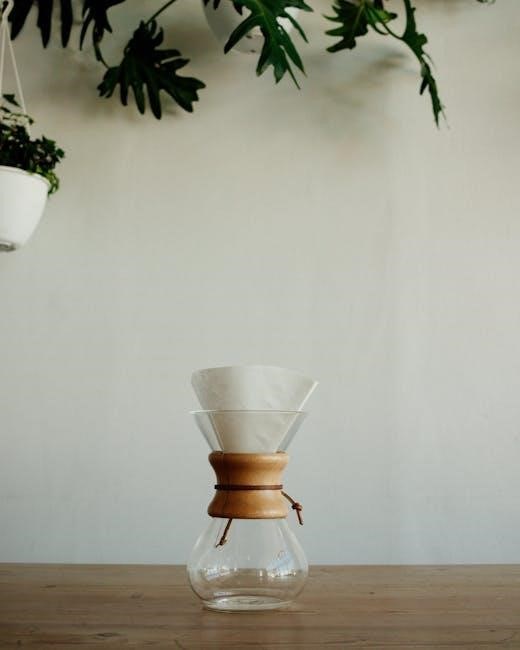
The Chemex Brewer – Sizes and Materials
Choosing the right Chemex is crucial; These iconic brewers come in various sizes, impacting brew volume and serving capacity. The classic Chemex models include the 3-cup, 6-cup, 8-cup, and 10-cup versions, though cup sizes are Chemex’s own – smaller than standard.
The 3-cup is ideal for single servings or brewing for one, while the 8-cup is popular for families or entertaining. Materials primarily consist of borosilicate glass, known for its heat resistance and non-porous nature, ensuring pure coffee flavor.
Original Chemex brewers feature a polished wood collar and leather tie, adding to their aesthetic appeal and functionality. Modern variations may include glass or silicone collars. Consider your typical brewing needs and aesthetic preferences when selecting your Chemex brewer – each offers a unique brewing experience!
Chemex Filters – Bonded vs. Pre-folded
Chemex filters are integral to the brewing process, significantly impacting the final cup’s clarity and taste. Two primary types are available: bonded and pre-folded. Bonded filters consist of three layers of paper, offering a slower filtration rate and resulting in a heavier-bodied brew with more oils retained.
These require manual folding before use, allowing for customization of the filter’s shape and potentially influencing extraction. Pre-folded filters are convenient and ready to use, saving time and ensuring consistent filter shape.
They are also three-layered but are pre-creased for easy placement within the Chemex. While slightly less customizable, they deliver a consistently clean and bright cup. Experimenting with both types allows you to discover your preferred flavor profile and brewing convenience!
Grinder – Burr vs. Blade & Grind Size
A quality grinder is paramount for exceptional Chemex coffee. Burr grinders are vastly superior to blade grinders, producing a consistent particle size crucial for even extraction. Blade grinders chop beans unevenly, leading to inconsistent flavor – some bitter, some sour.
Burr grinders, either conical or flat, crush beans between two revolving abrasive surfaces. For Chemex, a medium-coarse grind is ideal. It should resemble coarse sea salt. Too fine, and the filter will clog, resulting in a slow drip and bitter taste.
Too coarse, and the coffee will be under-extracted, yielding a weak and sour brew. Investing in a burr grinder and dialing in the correct grind size will dramatically elevate your Chemex experience, unlocking the full potential of your coffee beans.
Kettle – Gooseneck vs. Standard
Precision pouring is key to a successful Chemex brew, and a gooseneck kettle is essential for achieving it. Unlike standard kettles with broad spouts, gooseneck kettles offer a narrow, controlled stream of water.
This allows for a slow, deliberate pour, ensuring even saturation of the coffee grounds during the bloom and subsequent brewing stages. A standard kettle’s uncontrolled pour can disrupt the coffee bed, leading to uneven extraction and a less refined flavor.
While a standard kettle can be used, a gooseneck kettle provides the control necessary to master the Chemex method. Look for a kettle with a temperature control feature for optimal brewing – typically between 195-205°F (90-96°C).
Scale – Importance of Accurate Measurement
Consistency is paramount in Chemex brewing, and achieving it relies heavily on precise measurements. A digital scale, capable of measuring in grams, is an indispensable tool for any serious Chemex enthusiast.
Forget volumetric measurements like tablespoons – grams provide a far more accurate representation of coffee and water quantities. The ideal coffee-to-water ratio for Chemex typically falls between 1:15 and 1:17, meaning 1 gram of coffee for every 15-17 grams of water.
Using a scale ensures you replicate your preferred brew consistently, allowing you to fine-tune your technique and truly unlock the potential of your coffee beans. Invest in a scale with a timer function for even greater control over bloom and brew times.
The Chemex Brewing Process: Step-by-Step
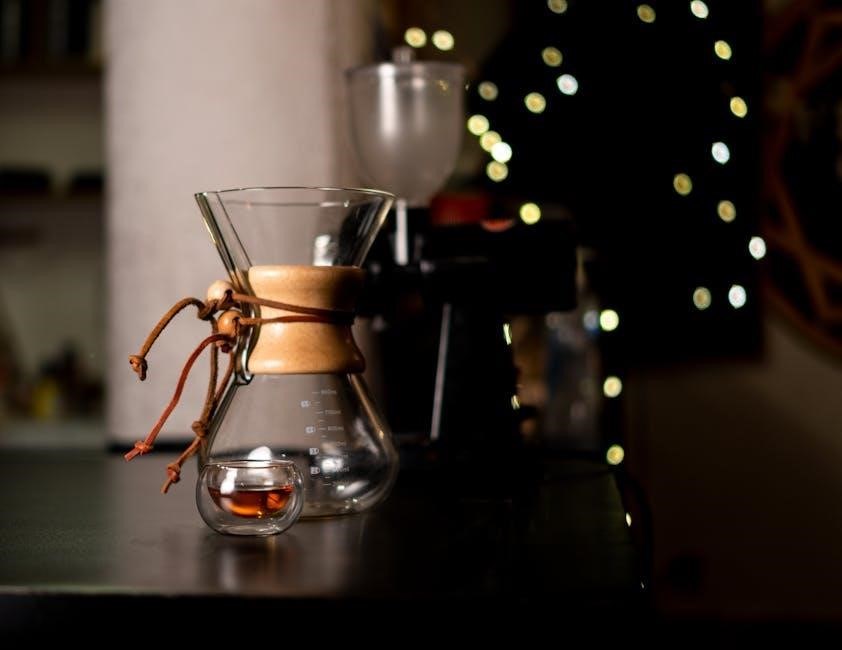
Embark on a journey to perfect coffee! Follow these detailed steps to unlock the Chemex’s full potential, from filter preparation to the final, satisfying pour.
Step 1: Filter Preparation – Rinsing and Folding
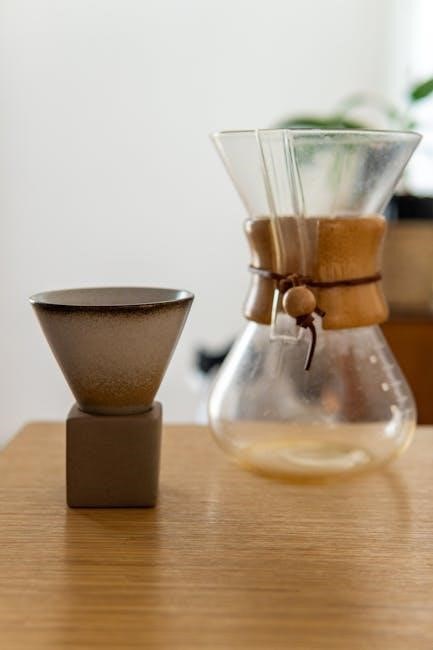
Begin with a crucial step: filter preparation. Chemex filters are significantly thicker than standard coffee filters, requiring careful attention. Start by unfolding the filter into a cone shape, with one side having three layers and the other having one.
Place the filter snugly into the Chemex brewer, ensuring the thicker, three-layered side faces the spout; This prevents potential tearing during brewing. Now, thoroughly rinse the filter with hot water. This serves two vital purposes: it eliminates any papery taste that could affect your coffee, and it preheats the Chemex, maintaining optimal brewing temperature.
Discard the rinse water, ensuring the Chemex is stable and ready for the next stage. Proper filter preparation is foundational for a clean, flavorful Chemex brew, setting the stage for coffee excellence.
Step 2: Coffee Grinding – Achieving the Right Consistency
The grind is paramount! For Chemex brewing, a medium-coarse grind is essential. Think of the texture of coarse sea salt or kosher salt. A burr grinder is highly recommended over a blade grinder, as it delivers a consistent particle size, crucial for even extraction.
Blade grinders produce an inconsistent grind, leading to both over and under-extraction, resulting in a muddy or sour taste. Aim for a grind that feels slightly gritty between your fingers. If the grind is too fine, it will clog the filter and result in a slow, bitter brew.
Conversely, a grind that’s too coarse will produce a weak, under-extracted coffee. Experimentation is key, but starting with a medium-coarse grind is the foundation for a balanced and flavorful Chemex experience.
Step 3: Water Heating – Optimal Temperature
Temperature is a critical factor! The ideal water temperature for Chemex brewing falls between 195-205°F (90-96°C). Using water that’s too hot can scorch the coffee grounds, leading to a bitter taste. Conversely, water that’s too cool will result in under-extraction and a sour, weak brew.
A gooseneck kettle is highly recommended for precise temperature control and a controlled pour. If you don’t have a temperature-controlled kettle, bring the water to a boil and then let it sit for about 30-60 seconds before pouring.
This allows the water to cool slightly to the optimal range. Consistent water temperature ensures a balanced and flavorful extraction, unlocking the full potential of your chosen coffee beans. Monitoring the temperature is key to a perfect cup!
Step 4: Bloom – Degassing the Coffee
The bloom is a crucial step! After adding your ground coffee to the Chemex filter, gently pour roughly twice the amount of water as coffee over the grounds – for example, 60 grams of water for 30 grams of coffee. This initial pour saturates the coffee, releasing trapped carbon dioxide gas.
This process, called blooming, allows for better extraction during the main pour. You’ll notice the coffee “puffing up” as the gases escape. Let the coffee bloom for approximately 30-45 seconds.
Observe the bloom carefully! A vigorous bloom indicates fresh coffee. A weak bloom suggests the coffee may be stale. Degassing prepares the coffee bed for even saturation and maximizes flavor development, resulting in a cleaner, more nuanced cup.
Step 5: Pouring Technique – Consistent and Controlled
Mastering the pour is key! After the bloom, begin a slow, steady pour in a circular motion, starting from the center and spiraling outwards. Maintain a consistent water level, avoiding pouring directly onto the filter paper.
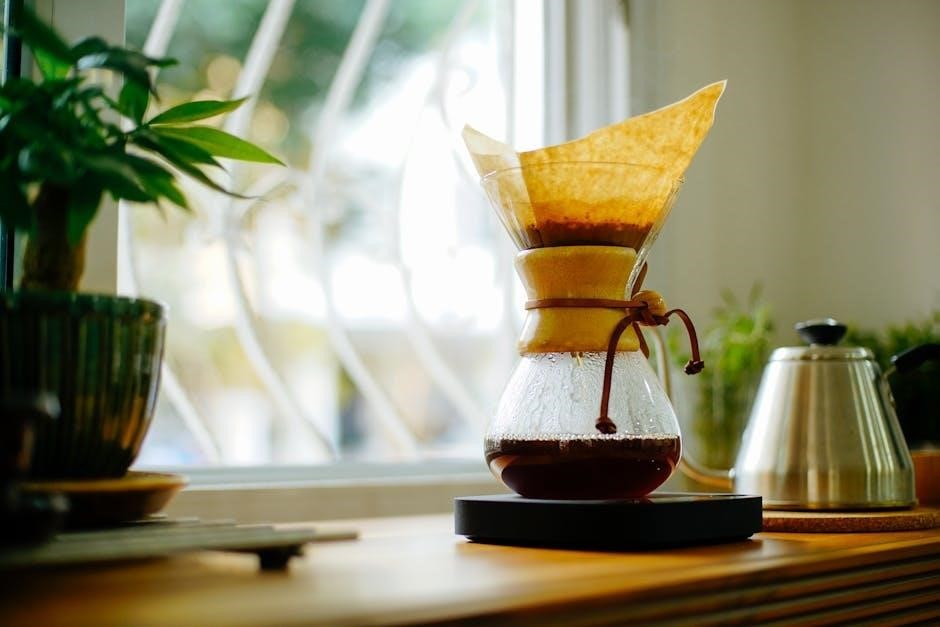
A gooseneck kettle is invaluable for precise control. Aim for a gentle, even saturation of the coffee grounds throughout the brewing process. The goal is to create a uniform coffee bed, ensuring all grounds are equally extracted.
Avoid disturbing the coffee bed with aggressive pouring. A smooth, controlled pour minimizes channeling and promotes a balanced extraction. Continue pouring until you reach your desired water weight, maintaining a consistent flow rate for optimal results.
Step 6: Brew Time – Monitoring and Adjusting
Timing is crucial for a perfect brew! A typical Chemex brew should take between 3 to 5 minutes. Monitor the drawdown – the time it takes for all the water to filter through the grounds.
If the brew is too fast (under 3 minutes), the coffee may be under-extracted, resulting in a sour or weak taste. Adjust by using a finer grind size in your next brew. Conversely, a slow drawdown (over 5 minutes) indicates over-extraction, leading to bitterness.
Coarser grounds are the solution for a slower brew. Experiment with slight adjustments to grind size and coffee-to-water ratio to dial in your preferred flavor profile. Consistent monitoring and adjustments are key to achieving Chemex perfection!
Troubleshooting Common Chemex Issues
Encountering problems? Don’t worry! This section addresses frequent Chemex brewing challenges, offering practical solutions to ensure a consistently delicious and satisfying coffee experience.
Bitter Coffee – Causes and Solutions
Bitterness in your Chemex brew often signals an imbalance in the extraction process. Several factors can contribute to this undesirable taste. Over-extraction, where too many compounds are pulled from the coffee grounds, is a primary culprit. This frequently stems from using water that’s too hot – ideally, aim for 195-205°F (90-96°C).
Grind size is crucial; if your grind is too fine, it increases the surface area exposed to water, leading to over-extraction. Coarsen your grind slightly and reassess. Brew time also plays a role; excessively long brew times extract unwanted bitter compounds.
Coffee-to-water ratio impacts bitterness. Using too much coffee for the amount of water can intensify the bitter notes. Finally, the quality of your coffee beans matters. Stale or darkly roasted beans are more prone to producing a bitter cup. Experiment with fresher, lighter roasts to mitigate this issue.
Weak Coffee – Adjusting Grind Size and Ratio
A weak or underwhelming Chemex brew typically indicates under-extraction – not enough desirable compounds were dissolved from the coffee grounds. The most common fix involves adjusting your grind size. Switch to a finer grind, as this increases the surface area for extraction, allowing more flavor to be released.
The coffee-to-water ratio is equally important. If you’re using too little coffee for the amount of water, the brew will naturally be weak. Increase the amount of coffee slightly, aiming for a ratio of around 1:15 to 1:17 (coffee to water by weight) as a starting point.
Ensure adequate bloom time – this initial saturation allows gases to escape, preparing the coffee for optimal extraction. Water temperature also matters; if the water isn’t hot enough, it won’t effectively extract the flavors.
Uneven Extraction – Pouring Technique Refinement
Uneven extraction manifests as a brew that’s simultaneously bitter and sour, indicating some grounds were over-extracted while others were under-extracted. The key to resolving this lies in your pouring technique. Aim for a slow, steady, and consistent pour, ensuring all coffee grounds are evenly saturated throughout the brewing process.
Avoid pouring directly onto the filter paper; instead, focus on saturating the coffee bed. Use a gooseneck kettle for precise control. Employ a circular pouring motion, working from the center outwards, and then back inwards, to ensure complete and uniform wetting of the grounds.
Pause briefly after the bloom to allow the coffee to degas fully. Consistent pour rate is crucial – fluctuations can lead to channeling, where water finds the path of least resistance, resulting in uneven extraction.
Slow Drip – Filter Blockage and Grind Size
A frustratingly slow drip time with your Chemex usually points to two primary culprits: filter blockage or an excessively fine grind size. First, examine the filter. Ensure it’s properly seated against the Chemex’s spout – a poor seal can restrict flow. Also, confirm you’re using the correct filter type for your Chemex size.
If the filter is correctly positioned, the issue likely resides with the grind. Too fine a grind creates excessive resistance, slowing the water’s passage. Adjust your grinder to a coarser setting. A medium-coarse grind, resembling coarse sand, is generally ideal for Chemex brewing.
Consider the coffee bean itself; oily beans can contribute to filter clogging. Experiment with slightly coarser grinds until you achieve a consistent and reasonable drip time – typically between 3.5 to 5 minutes.
Advanced Chemex Techniques
Elevate your Chemex brewing! Explore nuanced adjustments to coffee-to-water ratios, bean selection, and water quality for a truly customized and exceptional coffee experience.
Adjusting Coffee-to-Water Ratio
Fine-tuning your brew strength begins with the coffee-to-water ratio. The standard recommendation typically falls around 1:15 to 1:17 – meaning 1 gram of coffee for every 15 to 17 grams of water.
However, this is merely a starting point! Experimentation is key to discovering your personal preference. A lower ratio (e.g., 1:15) will yield a stronger, more concentrated brew, emphasizing body and intensity. Conversely, a higher ratio (e.g., 1:17) produces a lighter, more delicate cup, highlighting nuanced flavors.
Consider the coffee bean itself. Denser beans often benefit from a slightly finer grind and a lower ratio, while less dense beans may require a coarser grind and a higher ratio. Keep meticulous notes of your adjustments and the resulting flavor profiles. Small changes can make a significant difference, allowing you to unlock the full potential of each coffee and consistently brew a cup tailored to your exact taste.
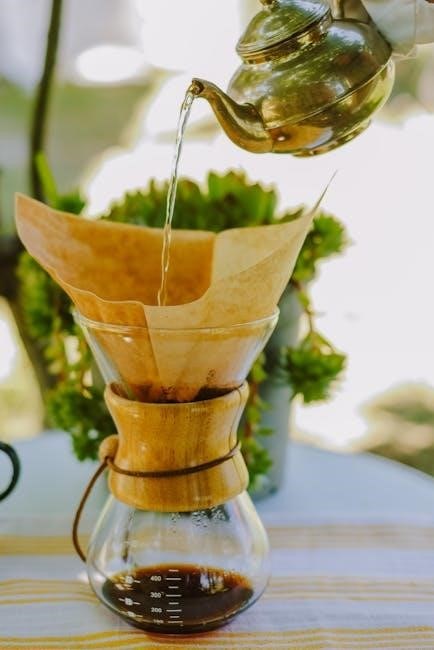
Experimenting with Different Coffee Beans
The Chemex truly shines when showcasing the unique characteristics of various coffee beans. Don’t limit yourself to a single origin or roast level! Exploring different beans is a journey of flavor discovery.
Start with single-origin coffees to truly appreciate their distinct profiles – Ethiopian Yirgacheffe’s floral notes, Sumatran Mandheling’s earthy tones, or Kenyan AA’s bright acidity. Then, venture into blends, crafted to balance different flavors.
Consider roast level too. Lighter roasts preserve more origin characteristics, offering brighter acidity and complex flavors. Darker roasts develop bolder, more chocolatey notes with reduced acidity. Adjust your grind size accordingly – lighter roasts often require a finer grind. Keep detailed brewing notes for each bean, documenting your observations. This will help you understand how different beans respond to the Chemex brewing method and refine your technique for optimal results.
Water Quality and its Impact on Flavor
Water is the largest component of your coffee, profoundly influencing the final taste. Using subpar water can significantly diminish even the highest quality beans. Filtered water is essential; tap water often contains chlorine and other minerals that negatively impact flavor;
Spring water or filtered tap water are excellent choices. Avoid distilled water, as it lacks the minerals needed for proper extraction. Ideal water hardness falls within a specific range – too soft, and the coffee will taste flat; too hard, and it can become bitter.
Water temperature is also crucial (around 200°F/93°C). Invest in a kettle with temperature control for consistent results. Experiment with different water sources to discern subtle flavor differences. Pay attention to Total Dissolved Solids (TDS); a TDS meter can help you assess water quality and optimize your brew.
Cleaning and Maintaining Your Chemex
Proper cleaning ensures longevity and prevents flavor contamination. After each use, discard the used filter and grounds. Rinse the Chemex thoroughly with hot water, avoiding harsh soaps which can leave residue. For deeper cleaning, use a mild dish soap occasionally, ensuring a complete rinse afterward.
To remove coffee oils that build up over time, create a paste of baking soda and water. Gently scrub the interior with a soft sponge, then rinse thoroughly. Avoid abrasive cleaners that can scratch the glass. Periodically, you can also use a solution of vinegar and water to descale the brewer.
Chemex filters should be stored in a dry place to prevent mold growth. Inspect the wooden collar for any signs of damage and treat with mineral oil if needed. Regular maintenance will keep your Chemex brewing exceptional coffee for years to come.